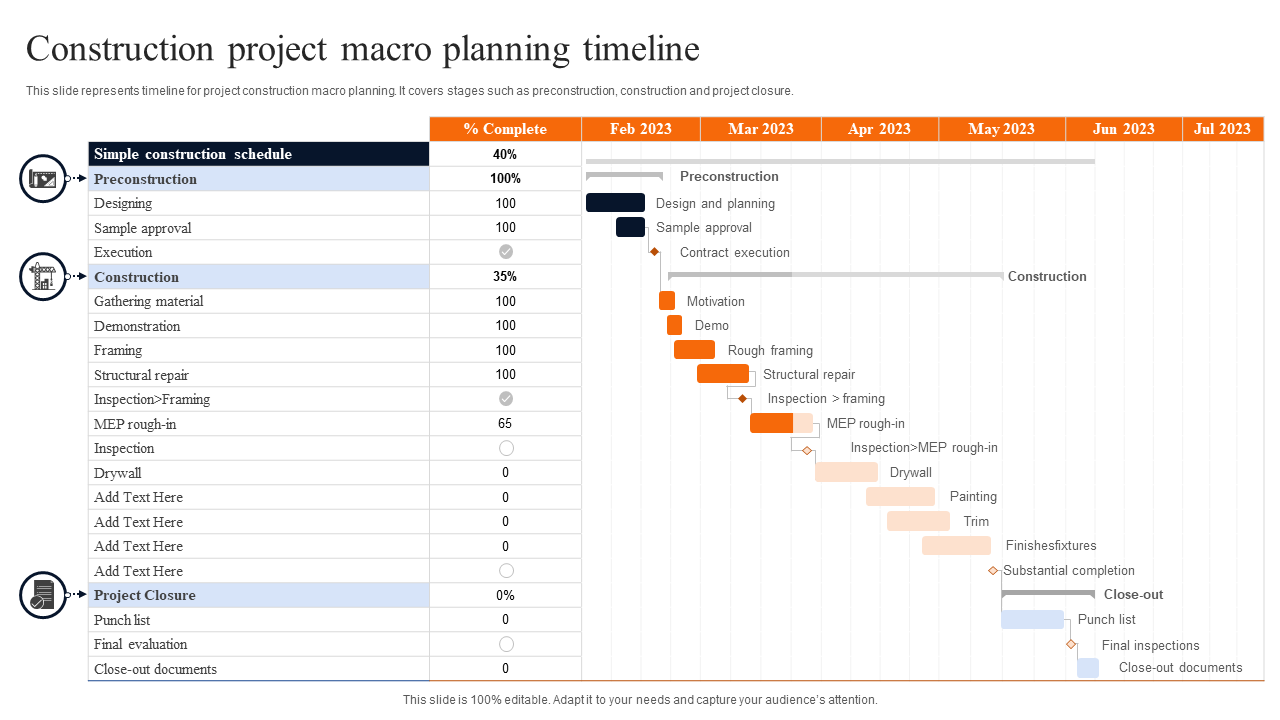
Understanding the concrete project timeline is crucial for effective planning and managing expectations. From initial consultation to final completion, concrete projects follow a structured process that can vary based on project scope, weather conditions, and site-specific factors. This guide helps property owners in Central Texas understand what to expect throughout their concrete project journey.
Project Phases Overview
Most concrete projects follow a similar sequence of phases, though the duration of each phase varies based on project complexity:
- Planning and Design (1-4 weeks)
- Site Preparation (1-3 days)
- Foundation Work (1-7 days)
- Formwork and Reinforcement (1-2 days)
- Concrete Placement (1 day)
- Finishing and Curing (1-7 days)
- Final Inspection and Completion (1-2 days)
Phase 1: Planning and Design (1-4 weeks)
The planning phase sets the foundation for project success:
Initial Consultation
- Site Assessment: Evaluation of soil conditions, drainage, and existing structures
- Requirements Discussion: Define project scope, budget, and timeline expectations
- Permitting Review: Check local building codes and obtain necessary permits
Design and Engineering
- Concrete Mix Design: Selection of appropriate concrete strength and additives
- Structural Calculations: Engineering for load requirements and soil conditions
- Detail Drawings: Creation of construction plans and specifications
Contract and Scheduling
- Bid Process: Multiple contractor quotes for competitive pricing
- Contract Signing: Formal agreement with payment terms and project scope
- Timeline Establishment: Weather-dependent scheduling considerations
Phase 2: Site Preparation (1-3 days)
Proper site preparation ensures long-term concrete performance:
- Excavation: Removal of unsuitable soil and grading to proper elevations
- Utility Location: Identification and protection of underground utilities
- Soil Compaction: Proper base preparation for foundation stability
- Drainage Installation: French drains, gutters, and grading for water management
Phase 3: Foundation Work (1-7 days)
Foundation construction varies significantly by project type:
Footings and Foundations
- Formwork Construction: Building forms for concrete placement
- Reinforcement Installation: Steel rebar and wire mesh placement
- Concrete Placement: Foundation concrete poured and finished
- Curing Period: 7-28 days for foundation strength development
Phase 4: Formwork and Reinforcement (1-2 days)
This phase prepares for the final concrete pour:
- Form Installation: Precise placement of concrete forms and edge restraints
- Vapor Barrier: Moisture protection layer installation
- Reinforcement: Steel reinforcement placement and tying
- Embedded Items: Installation of anchors, conduits, and utility boxes
Phase 5: Concrete Placement (1 day)
The concrete pour is the most visible phase of the project:
- Ready-Mix Delivery: Coordinated scheduling with concrete supplier
- Placement: Systematic pouring in controlled sections
- Consolidation: Vibration to remove air pockets and ensure proper density
- Strike-off: Initial leveling of concrete surface
Phase 6: Finishing and Curing (1-7 days)
Proper finishing and curing are critical for concrete quality:
Finishing Process
- Floats and Trowels: Surface smoothing and texturing
- Control Joints: Planned crack locations cut into fresh concrete
- Edge Treatments: Bullnose or radius edges for safety and appearance
- Surface Treatments: Broom finishes, exposed aggregate, or decorative options
Curing Methods
- Moisture Curing: Wet curing blankets or plastic sheeting
- Curing Compounds: Sprayed sealants that retain moisture
- Time Frame: Minimum 7 days, preferably 28 days for full strength
Phase 7: Final Inspection and Completion (1-2 days)
The project concludes with quality verification:
- Form Removal: Careful stripping of forms without damage
- Clean-up: Site restoration and debris removal
- Final Inspection: Quality verification and punch list completion
- Owner Walk-through: Review of completed work and warranty explanation
Timeline Factors and Variables
Several factors can influence project duration:
Weather Considerations
- Temperature: Concrete work typically requires 40°F-90°F temperatures
- Precipitation: Rain delays can add days or weeks to schedules
- Humidity: Affects concrete curing and finishing operations
- Seasonal Planning: Central Texas spring and fall are optimal construction seasons
Project Complexity Factors
- Size and Scope: Larger projects require more coordination
- Design Complexity: Custom finishes and decorative elements add time
- Site Conditions: Difficult access or soil issues extend timelines
- Permitting Delays: Local approval processes can cause scheduling delays
Contractor and Material Factors
- Material Availability: Specialty concrete mixes may require advance ordering
- Equipment Scheduling: Specialized equipment must be coordinated
- Labor Resources: Skilled worker availability affects project pace
- Quality Standards: Higher quality requirements extend completion time
Managing Expectations and Communication
Effective communication ensures project success:
- Regular Updates: Weekly progress reports from your contractor
- Contingency Planning: Built-in schedule buffers for weather delays
- Change Order Process: Formal procedures for scope modifications
- Quality Milestones: Defined checkpoints for work completion
Understanding the concrete project timeline helps property owners plan effectively and work collaboratively with their contractors. While timelines can vary based on specific project conditions, experienced Central Texas contractors can provide accurate scheduling based on local weather patterns and construction practices.